

Professional Wind Turbine Drone Inspection: Technical Standards and Methodologies

Updated: Jun 16
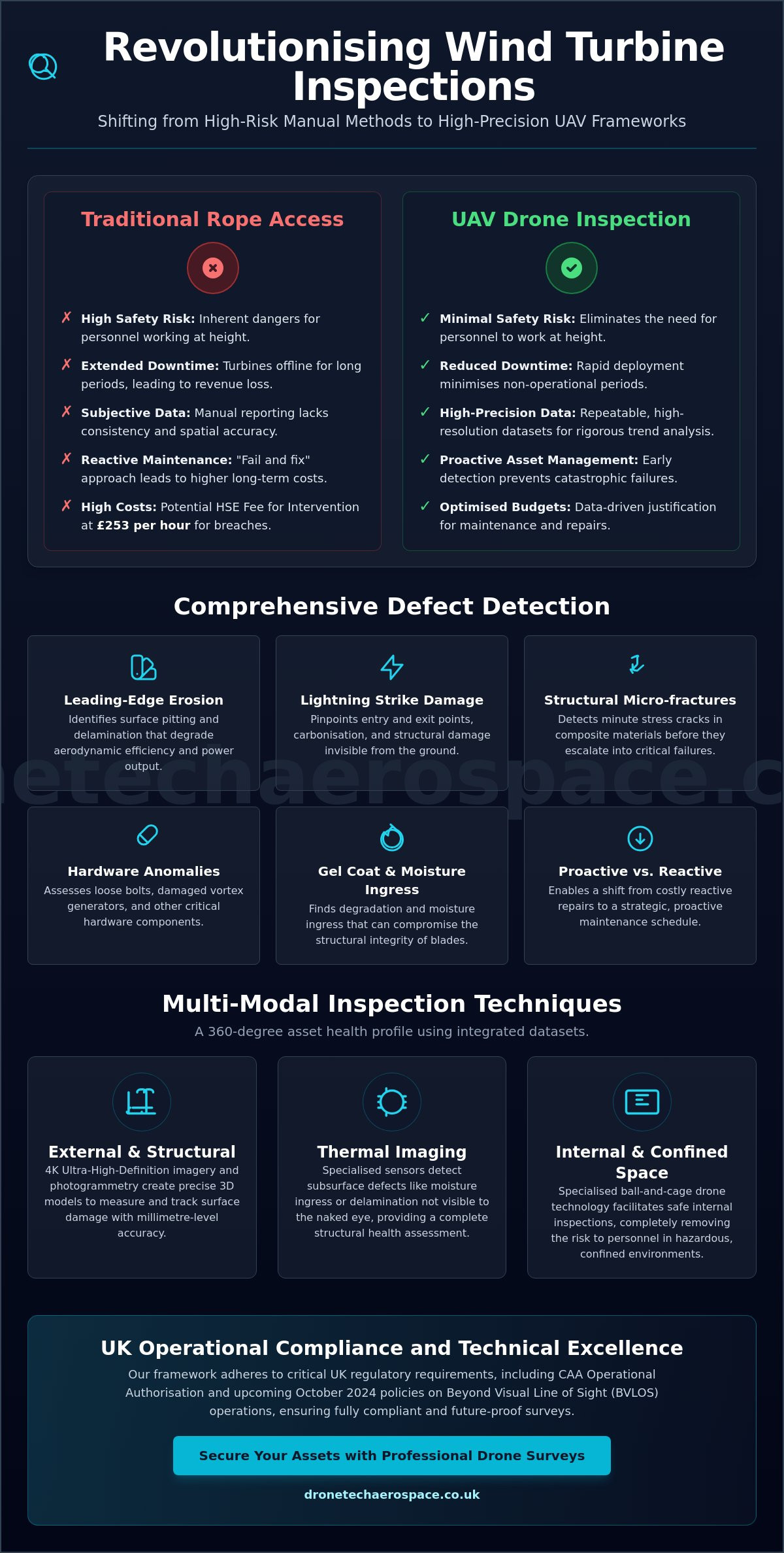
With the Health and Safety Executive (HSE) now charging a Fee for Intervention rate of £253 per hour for material breaches, can your asset management strategy afford the inherent safety risks and data inconsistencies of traditional rope access?
Most industry leaders recognise that manual methods are increasingly incompatible with the UK's requirement to reach 18.8GW of offshore wind capacity by the end of 2026. Adopting a professional wind turbine drone inspection framework is now a technical necessity for maintaining operational integrity in high-stakes environments.
For more information on Geologix and their multidisciplinary geotechnical and civil engineering services, click here.
You likely face significant pressure to justify maintenance budgets whilst simultaneously reducing turbine downtime. This article details how advanced UAV inspections provide the high-precision data and subsurface defect detection required for proactive asset management. You'll learn about the technical standards governing modern surveys, including the impact of the October 2024 CAA policy on Beyond Visual Line of Sight (BVLOS) operations. We provide a methodical overview of the systems that transform aerial imagery into repeatable, high-resolution datasets for rigorous trend analysis.
Key Takeaways
Understand how rapid UAV deployment minimises turbine downtime and provides a clearer justification for maintenance and repair budgets.
Explore the technical methodologies behind a multi-modal wind turbine drone inspection, integrating thermal imaging and internal assessments for a comprehensive asset health profile.
Identify the critical UK regulatory requirements, including CAA Operational Authorisation and the safety protocols necessary for high-stakes industrial environments.
Learn how specialised ball-and-cage drone technology facilitates internal and confined space inspections, eliminating the safety risks associated with personnel working at height.
Discover the advantages of repeatable, high-resolution data sets in establishing long-term trend analysis for proactive wind farm asset management.

Table of Contents
The Evolution of Wind Turbine Inspection Standards
The methodology for wind turbine maintenance and monitoring has transitioned from manual, reactive procedures to a precision-led UAV framework. This evolution is essential as the UK’s offshore wind capacity is projected to reach 18.8GW by the end of 2026. Modern wind turbine drone inspection protocols now serve as the definitive standard for assessing blade integrity and validating complex warranty claims. By capturing data from perspectives that are physically inaccessible to human technicians, these systems provide a level of granular detail that was previously unattainable.
Technical inspections are no longer elective; they are critical for ensuring turbine longevity. Precision sensors identify specific aerodynamic degradations, such as leading-edge erosion, and detect the precise entry and exit points of lightning strikes. These defects, if left unmanaged, compromise the structural stability of the composite materials and reduce power output. Professional UAV surveys detect a wide spectrum of technical issues, including:
Leading-edge erosion (surface pitting and delamination)
Lightning strike damage (carbonisation and structural exit points)
Structural micro-fractures and stress cracks
Gel coat degradation and moisture ingress
Hardware anomalies (loose bolts or damaged vortex generators)
Limitations of Traditional Inspection Methods
Manual rope access and ground-based telescope observations present significant operational liabilities. These methods involve inherent safety risks for personnel working at height and require extended periods of turbine downtime (the time the asset is offline and not generating revenue). Manual reporting is also notoriously subjective. The data generated often lacks the spatial accuracy required for modern trend analysis. This inconsistency makes it difficult for asset managers to justify repair budgets or predict the remaining useful life of a component with any certainty.
Proactive vs Reactive Maintenance Strategies
Professional wind turbine drone inspection facilitates a shift from reactive "fail and fix" cycles to proactive asset management. By utilising repeatable datasets, operators can monitor the progression of surface delamination over specific time intervals. This early detection is essential for preventing catastrophic blade failure. The ability to track defect evolution allows for the strategic allocation of maintenance resources. This methodical approach significantly reduces long-term operational expenditure (OPEX) and ensures that repairs are performed during planned windows of low wind activity, protecting the project's overall return on investment.
Multi-Modal Inspection Techniques: External, Internal, and Thermal
A professional wind turbine drone inspection requires a multi-layered technical audit that extends far beyond basic aerial photography. To produce a complete health profile of a wind farm asset, operators must integrate visual, thermal, and internal datasets into a single, cohesive reporting structure. This 360-degree assessment ensures that no defect remains undetected. We utilise 4K ultra-high-definition imagery to provide the clarity required for insurance-grade reports and loss adjuster inspections; this level of detail is essential for verifying structural integrity in high-stakes environments.
The efficacy of these surveys relies on the strategic deployment of specialised sensors. These tools allow for the identification of specific damage categories that traditional methods often overlook. Recent updates to UK drone inspection rules have simplified the operational framework for these complex infrastructure audits, allowing for more frequent and detailed data collection across the energy sector.
External Surface and Structural Assessments
External surveys focus on the aerodynamic efficiency and structural surface of the blades. We identify leading-edge erosion, delamination, and surface cracks with millimetre precision. Advanced UAVs also detect lightning strike points and receptor damage, which are often invisible from the ground. By utilising high-resolution photogrammetry, we generate 3D models of the turbine. These models allow asset managers to measure damage areas accurately and track the progression of defects over multiple inspection cycles.
Internal Blade and Confined Space Inspections
Internal structural integrity is a critical component of turbine longevity. We utilise specialised ball and cage-drone technology to perform internal and confined space inspections within the blade cavity. This methodology identifies internal bond failures and manufacturing defects that external visual checks cannot find. By deploying these protective-frame drones, we significantly reduce the requirement for personnel to enter hazardous, cramped environments, thereby improving the overall safety profile of the site.
Thermographic Imaging for Electrical and Structural Health
Thermal surveys provide a diagnostic capability that visual data cannot match. Using BINDT Level 2 thermography, we detect subsurface fractures by identifying anomalous heat signatures within the composite materials. These thermal variances often indicate internal electrical faults or structural delamination before they manifest as visible cracks. For operators overseeing diversified portfolios, our wind turbine drone inspection systems provide the technical precision required for robust asset management and long-term reliability.
Strategic Advantages: Minimising Downtime and Optimising Budgets
The commercial viability of a wind farm depends on maintaining high availability whilst controlling operational expenditure. A professional wind turbine drone inspection offers a measurable return on investment by addressing the two most significant drains on profitability: turbine downtime and inefficient maintenance scheduling. Traditional methods often require assets to be offline for several hours, or even days, per turbine. In contrast, advanced UAV systems complete a full external audit in approximately 15 to 20 minutes. This speed allows operators to capitalise on narrow weather windows, which are a frequent constraint in the UK's North Sea and Atlantic environments.
By shifting from subjective manual reports to a consistent, digital data stream, asset managers can establish multi-year trend tracking. This capability transforms maintenance from a reactive necessity into a strategic process. You can identify which defects require immediate intervention and which can be monitored, allowing for precise budget allocation. With the UK's offshore wind capacity set to reach 18.8GW by the end of 2026, the scale of infrastructure requires this level of automated, data-driven prioritisation to remain competitive. The implementation of a standardised wind turbine drone inspection programme ensures that data is captured with enough precision to support complex insurance claims and long-term asset management.
Operational Efficiency and Time Savings
The logistical efficiency of UAV deployment is a primary differentiator for large-scale wind farm management. A small drone team replaces the extensive logistical footprint of large rope-access crews, reducing on-site personnel requirements and associated health and safety liabilities. This rapid turnaround is particularly valuable when managing multiple turbines across a vast site. You're no longer limited to inspecting one or two units per day; instead, a single team can audit an entire array within a fraction of the time, significantly minimising the window of lost energy production.
Data Accuracy and Professional Reporting
The transition from paper-based checklists to digital twin 3D models represents a significant leap in reporting quality. These high-resolution models provide an immutable record of the asset's condition, which is essential for insurance-grade reports and loss adjuster inspections. When submitting warranty claims to manufacturers, having clear, timestamped, and geolocated evidence of a defect ensures a higher success rate. This professional-grade data also provides the necessary transparency for insurance risk assessments, potentially influencing premiums by demonstrating a rigorous approach to asset integrity and safety compliance.
Operational Compliance and Safety Protocols in the UK
Compliance is the cornerstone of industrial UAV operations. With the Health and Safety Executive (HSE) Fee for Intervention (FFI) rate standing at £253 per hour for material breaches, the cost of regulatory oversight is substantial. A professional wind turbine drone inspection must be conducted within a strict legal framework to mitigate both physical and financial risks. This involves navigating the complex UK Civil Aviation Authority (CAA) regulations that govern airspace usage and pilot competency. For organisations requiring a high-performance partner that prioritises regulatory accountability, our wind turbine drone inspection services ensure full operational compliance across all UK territories.
Managing risk requires more than just technical skill; it demands a comprehensive Site-Specific Risk Assessment (SSRA) for every deployment. These assessments account for local topography, weather variables, and the proximity of other industrial assets. Furthermore, data security is paramount. All industrial data collection must adhere to the General Data Protection Regulation (GDPR) and specific sector-standard security protocols to protect sensitive infrastructure information from unauthorised access.
UK Civil Aviation Authority (CAA) Requirements
Every commercial drone operator must hold a valid Operational Authorisation from the CAA for complex or offshore environments. We ensure all pilots possess the necessary General Visual Line of Sight Certificate (GVC) or A2 Certificate of Competency (A2 CofC) as required by the specific flight category. Insurance is another non-negotiable factor. All operations must remain compliant with EC 785/2004, providing the necessary public liability coverage for high-value industrial sites. Following the October 2024 policy shift, we also integrate Beyond Visual Line of Sight (BVLOS) protocols where authorised, allowing for more efficient data gathering across extensive wind farm arrays.
Safety Management and RAMS
Robust Risk Assessments and Method Statements (RAMS) are the foundation of our safety culture. These documents provide a granular breakdown of the operational sequence and the mitigation strategies for identified hazards. On-site, we establish strict exclusion zones to protect personnel and equipment. Emergency procedures, including lost-link protocols and manual override triggers, are tested and verified before any flight commences. This methodical approach positions the drone operator not merely as a service provider, but as a high-performance technical partner capable of managing the unique safety challenges of the renewable energy sector.
Drone Tech Aerospace: Technical Excellence in Renewable Energy Surveys
Drone Tech Aerospace operates as a high-capacity specialist in the UK renewable energy sector, providing a bespoke methodology for large-scale infrastructure monitoring. Our wind turbine drone inspection protocols are engineered to deliver high-precision data that integrates seamlessly with wider asset management strategies. We provide specialised expertise in internal and confined space inspections (utilising ball-and-cage UAV systems) to assess structural bond failures and manufacturing defects without the inherent liabilities of manual entry. This technical precision ensures that every report meets the rigorous standards required for engineering audits, loss adjuster inspections, and insurance risk assessments.
Comprehensive Renewable Energy Solutions
Our operational capability extends beyond individual assets to encompass the entire renewable energy site. We integrate wind turbine surveys with wider site monitoring and drone topographical land surveys to provide a holistic view of infrastructure health and terrain stability. This multi-disciplinary approach includes:
Solar-farm drone inspections (identifying cell-level defects, string failures, and vegetation encroachment)
Construction site monitoring and inspections (tracking project milestones, material placement, and safety compliance)
Thermographic surveys (detecting thermal anomalies in electrical components, substations, and composite structures)
Ecological surveys (providing high-resolution photography and video for environmental impact monitoring)
By centralising these services, we ensure that technical data collection is consistent across all project phases, from initial construction surveys to long-term lifecycle management.
Partnering with Drone Tech Aerospace
UK industrial leaders trust Drone Tech Aerospace due to our ten years of operational longevity and our proven track record in demanding, high-stakes environments. We don't merely provide imagery; we deliver a structured data pipeline that streamlines your operations and maintenance (O&M) programme. Our professional-grade technical reports provide the empirical evidence necessary for warranty claims, insurance loss adjustments, and long-term trend analysis. By adopting our proprietary methods and high-capacity delivery systems, asset managers can reduce the complexity of their inspection schedules whilst increasing the reliability of their data.
Contact our technical team to discuss your specific requirements or to request a bespoke wind turbine drone inspection proposal tailored to your portfolio's scale and location.
Securing Asset Longevity through Advanced Technical Audits
The transition towards a data-centric maintenance model is essential for the UK's expanding renewable energy infrastructure. By integrating multi-modal datasets and high-resolution thermal imaging, operators move beyond reactive repairs to a sophisticated, predictive asset management framework. This methodology significantly reduces the safety risks of personnel working at height whilst providing a repeatable data set for long-term trend analysis. Implementing a professional wind turbine drone inspection programme ensures every structural defect is identified and documented with absolute precision.
With 10 years of industrial inspection expertise and a team of CAA authorised professional pilots, Drone Tech Aerospace delivers the technical precision required for high-stakes environments. Our deployment of specialised internal cage-drone technology ensures that even the most physically restrictive areas of a turbine are audited to an insurance-grade standard. We invite you to Request a Technical Proposal for Wind Turbine Inspections to optimise your maintenance programme and protect your operational expenditure. We look forward to supporting your transition to a more efficient, data-driven inspection cycle.
Frequently Asked Questions
How long does a wind turbine drone inspection typically take?
A standard external wind turbine drone inspection typically takes between 15 and 20 minutes per turbine. This rapid turnaround represents a significant efficiency gain over traditional rope access methods, which often require several hours per unit. The exact duration depends on the specific technical requirements of the audit, such as whether the flight plan includes high-resolution thermographic capture or internal cavity assessments.
Can drones detect internal structural damage in wind turbine blades?
Drones detect internal structural damage through the deployment of specialised ball-and-cage UAV systems designed for confined space inspections. These units enter the blade cavity to identify bond failures, manufacturing defects, and structural delamination that are invisible from the exterior. This methodology provides a high-resolution visual record of the internal composite health without requiring personnel to enter hazardous environments.
What are the safety advantages of using UAVs over rope access?
The primary safety advantage of UAV technology is the total elimination of the requirement for personnel to work at height. By removing the need for traditional rope access, operators significantly reduce their liability and the risk of falls or equipment failure. A smaller on-site footprint also minimises the logistical complexities and health and safety risks associated with managing large manual inspection teams in high-stakes environments.
Are drone inspections suitable for offshore wind farms in the UK?
Drone inspections are highly suitable for offshore wind farms and are frequently the preferred method for managing these complex assets. All offshore operations in UK waters must be conducted by pilots holding a specific Operational Authorisation from the Civil Aviation Authority (CAA). These surveys are essential for maintaining the 18.8GW of offshore capacity projected for the UK by the end of 2026.
What resolution of imagery is provided in a technical drone report?
Technical drone reports provide 4K ultra-high-definition (UHD) imagery and high-resolution thermographic data. This level of detail is necessary for insurance-grade reports and allows for the identification of millimetre-scale defects such as surface pitting, leading-edge erosion, or micro-fractures. The data is often delivered as a digital twin or a 3D model to facilitate precise damage measurement and long-term trend analysis.
How do drone inspections help with insurance and warranty claims?
Drone inspections provide empirical, timestamped evidence that is critical for validating warranty claims and supporting insurance risk assessments. The high-resolution data serves as an immutable record of the asset's condition at a specific point in time. This transparency allows loss adjusters to make more accurate determinations, often leading to more efficient claim processing and clearer justification for maintenance and repair budgets.
What weather conditions are required for a successful drone survey?
Successful surveys require stable weather conditions, typically characterised by wind speeds below 10 to 12 metres per second and an absence of precipitation. Whilst modern industrial UAVs are rated for high-performance in demanding environments, heavy rain or extreme gusts can compromise data quality and flight safety. Operations are planned within specific weather windows to ensure the highest degree of technical accuracy and operational safety.
Do you provide thermographic data for wind turbine components?
We provide comprehensive thermographic data for wind turbine blades, nacelles, and electrical components using BINDT Level 2 thermography. Our sensors detect subsurface heat signatures that indicate internal fractures, moisture ingress, or electrical faults before they manifest as visible surface damage. This thermographic data is integrated with visual surveys to create a multi-modal health profile of the entire asset for proactive management.




Comments